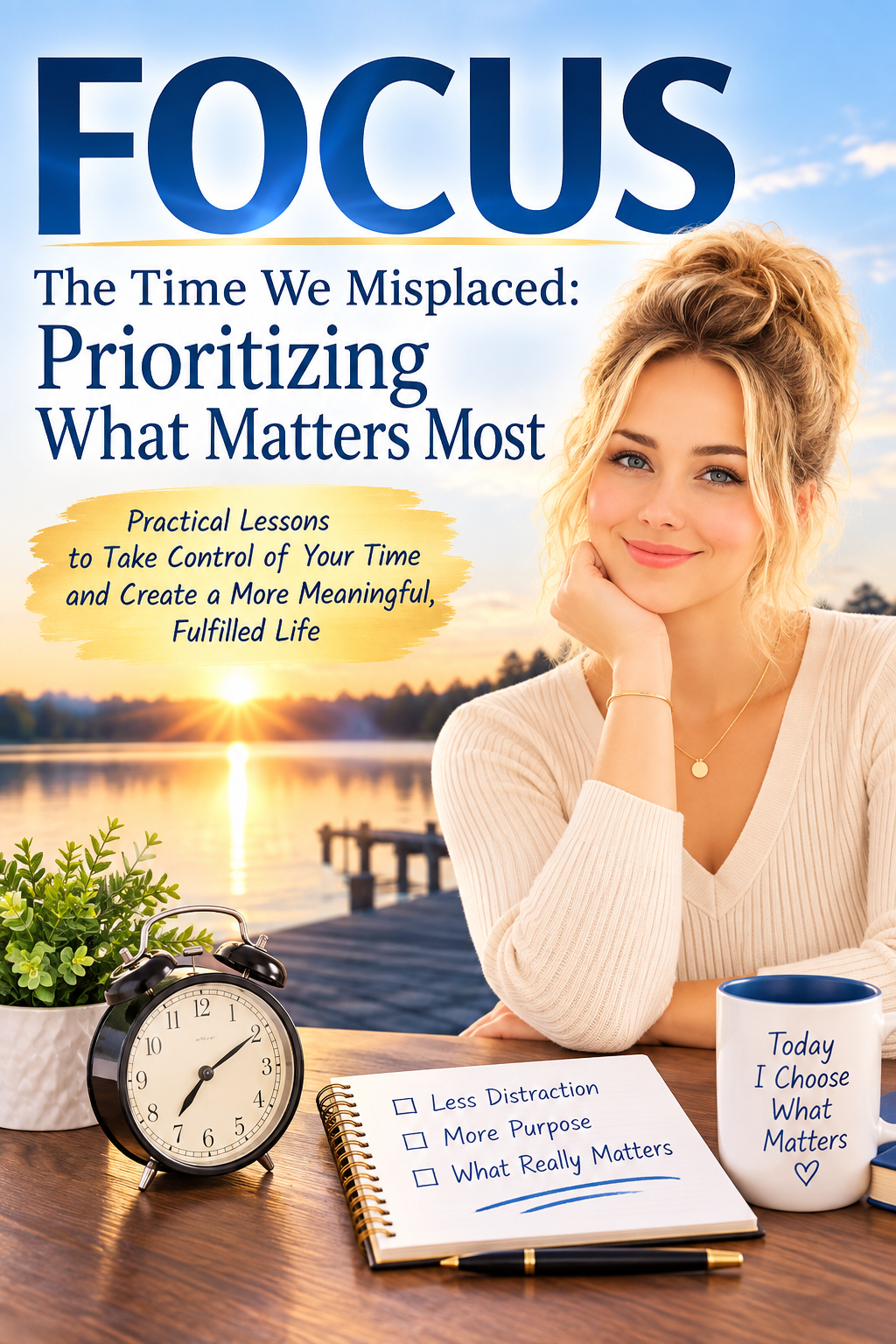
Your time is one thing you can never get back. Learn how to stop letting distractions, procrastination, constant busyness, and misplaced priorities steal the time you could be spending on what truly matters.
Most of us do not intentionally waste our lives. Time usually disappears a few minutes at a time.
We answer one more message. We scroll a little longer. We worry about something we cannot change. We put off something important because today feels too busy. We say yes when we really wanted to say no.
Then weeks become months, months become years, and we look back wondering why the things we said mattered most kept getting pushed aside.
The Time We Misplaced is about changing that pattern. It is not about cramming more work into your day or trying to become productive every minute.
It is about becoming more intentional with the time you already have.
You will look at the choices underneath your schedule: your values, distractions, boundaries, priorities, relationships, procrastination, rest, and the way your priorities change as life changes.
The goal is simple: spend less of your life on things that do not matter and more of it on the people, experiences, and goals that do.
Practical ideas for reclaiming your attention and making more conscious choices about your time.
Recognize how easily time slips away and why paying attention to where it goes is the first step toward change.
Clarify what matters most to you and begin aligning your daily choices with the life you actually want.
Explore the multitasking trap and learn why giving one thing your attention can help you feel less scattered.
Use mindfulness, reflection, walking, journaling, and gratitude to reconnect with the moment you are actually living.
Create clearer priorities and use tools such as the Eisenhower Matrix to separate importance from urgency.
Break intimidating tasks into smaller steps, limit distractions, and build momentum by simply getting started.
Reflect on lost time without getting trapped in regret, and turn yesterday's lessons into better choices today.
Look at the people and environments around you and create support for the priorities you want to protect.
Make room for responsibilities, relationships, rest, play, personal growth, and priorities that evolve with you.
“The goal isn't to squeeze more activity into your life. The goal is to make sure your life isn't being crowded out by things that never really mattered.”
The package is designed to help you turn the ideas you read into something you can actually use.
Reading can give you ideas. Writing down your own answers can help you see what those ideas mean in your life.
The workbook follows the major themes of the book and gives you space to think about your own time, habits, distractions, values, priorities, and goals.
Each day, ask yourself:
“Did I spend my time on what mattered?”
You do not need a perfect answer. The value is in noticing. Awareness gives you the chance to make a different choice tomorrow.
No extra videos to keep up with. Just useful information delivered in short, readable emails.
Your ebook and workbook/journal download information.
Where your time goes, the difference between busy and productive, and the multitasking trap.
What matters most, protecting your time by saying no, and taking the first step instead of waiting.
Learning from yesterday, scheduling important things, and deciding how you want to use the time ahead.
You cannot recover yesterday, but you can become more intentional about today. Start identifying what deserves your time—and what no longer does.
You receive the digital ebook The Time We Misplaced: Prioritizing What Matters Most, the companion 30-day workbook/journal, and a 10-email follow-up series.
No. This is a digital package designed for convenient downloading and reading on your computer, tablet, or other compatible device. You may also print the workbook for your personal use.
No. This package is intentionally simple: the ebook, workbook/journal, and helpful follow-up emails. There are no video lessons to keep up with.
No. The 30-day journal gives you structure, but you can work through the material at your own pace and revisit the exercises whenever your priorities change.
No. The larger focus is deciding what deserves your time. That can include relationships, rest, health, personal goals, responsibilities, enjoyment, and other things that matter to you.
Start with one decision: give more of your time to what truly matters.